Many homeowners assume concrete season ends when the leaves fall. In Central Pennsylvania, that isn’t true. With the right preparation and protection, RJL Concrete Service pours concrete through the colder months. So if your driveway, sidewalk, or commercial slab can’t wait until spring, it may not have to.
Can You Pour Concrete in the Winter?
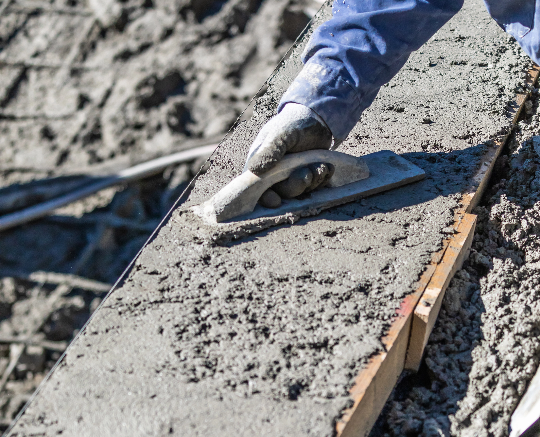
Yes. Concrete can be poured in winter when it’s properly produced, placed, and protected during early curing. Common cold-weather methods include using heated water in the mix, adding accelerating admixtures, and covering fresh concrete with insulated blankets.
“Cold-weather concrete can be successfully placed when it is properly produced, placed, and protected during the early stages of curing,” says Rashaun of RJL Concrete Service.
Why Cold Weather Is Hard on Fresh Concrete
Here’s the simple version: concrete doesn’t dry, it cures. Cement reacts with water in a chemical process called hydration, and that reaction slows down in the cold.
The bigger risk is freezing. Fresh concrete still holds a lot of water. If that water freezes before the concrete gains enough early strength, the ice expands and can permanently weaken the slab.
That’s why early protection matters so much. “ACI guidance commonly uses approximately 500 PSI compressive strength as the point at which concrete has developed sufficient early strength to better resist freezing damage,” Rashaun explains. (ACI is the American Concrete Institute, the industry’s standards body.)
How RJL Pours Concrete in Cold Weather
Our cold-weather process covers four areas:
- Heated water in the mix: Warm water raises the concrete’s starting temperature so curing gets off to a strong start.
- Accelerating admixtures: These additives speed up setting and early strength gain, which shortens the window when freezing can do damage.
- Insulated concrete blankets: “We’ve used insulated concrete blankets to retain heat generated during hydration and protect the concrete from freezing,” Rashaun says.
- An unfrozen base: “We also make sure the base is not frozen before placement.” Concrete poured on frozen ground can settle and crack as the ground thaws.
Depending on conditions, we may also use additional insulation or an adjusted mix design.
How Long Do the Blankets Stay On?
There’s no set number of hours. “The blankets stay on based on the actual weather conditions and how quickly the concrete is gaining strength,” Rashaun explains. For a winter residential pour, blankets may stay in place for several days. The exact time depends on temperatures, wind, concrete temperature, mix design, and the size and thickness of the pour.
How Cold Is Too Cold to Pour Concrete?
RJL doesn’t use one temperature as an automatic cutoff. “Once temperatures are approaching freezing, the forecast, ground conditions, wind, concrete temperature, and our ability to properly protect the concrete all become important,” Rashaun says.
We will postpone a pour if:
- The ground or subgrade is frozen
- Temperatures are expected to drop below freezing without adequate protection
- Weather makes it difficult to properly place, finish, and cure the concrete
In short, we’ll reschedule before we’ll risk your concrete.
Pros and Cons of a Winter Concrete Project
| Pros | Cons |
|---|---|
| Your project is finished and ready by spring | Can cost more for materials, labor, and monitoring |
| Avoid the spring and summer rush | Weather may cause delays |
| Fix safety hazards now instead of waiting months | Fewer pour-ready days |
Is winter concrete more expensive? Often, yes. “Winter concrete can cost more because it may require additional preparation, materials, labor, and monitoring,” Rashaun explains. RJL will walk you through those costs up front.
Caring for Concrete Poured in Winter
New concrete needs extra care during its first winter:
- Skip de-icing salts. “For newly poured concrete, we recommend avoiding deicing salts while the concrete is young and still developing its durability,” Rashaun says.
- Use sand for traction. “Sand or other non-corrosive traction materials can provide traction without adding deicing chemicals to the concrete surface.”
- Keep vehicles off until RJL confirms the concrete is ready.
- Don’t pile snow on the new slab, and keep runoff away from it.
For existing concrete, use de-icers responsibly and follow the manufacturer’s directions. Chloride-based de-icers can contribute to deterioration with repeated moisture and freeze-thaw exposure. For a full list of safe and unsafe products, see our guide: How Thick Should a Concrete Driveway Be in Central PA?
Schedule Your Winter Concrete Project
From driveways and sidewalks to commercial slabs, RJL Concrete Service pours year-round when conditions allow, and we protect every pour. Call 717-686-2482 or request a free estimate online today!
About RJL Concrete Service:
Rashaun Hill is the owner and operator of RJL Concrete Service, a locally owned and operated concrete contractor serving Harrisburg and Central Pennsylvania. For the past 9 years, Rashaun has specialized in residential, commercial, and industrial concrete. His work includes driveways, sidewalks, patios, steps, foundations, and garage floors, as well as parking lots, loading docks, dumpster pads, and ADA-compliant sidewalks and ramps.
On every job, Rashaun & his team focus on what lasts: proper base preparation, the right thickness for the load, and honest pricing based on what the concrete project actually needs.
PA Home Improvement Contractor Registration #PA213077 · Fully Insured